Notes for Numbers 21: 1-9
God is Commander-in-Chief of these kinds of creatures that apparently exist as instruments of torture. They are granted vast habitats where they thrive and reproduce and maintain healthy populations, all for a purpose. Within the jurisdiction of the Usurper, Satan himself, evil and suffering are sustained – temporarily.
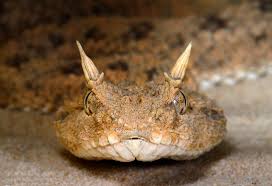
God “sent fiery serpents among the people.” It’s reasonable to think these creatures weren’t invented on the spot, although they certainly could have been. Rather, I tend to think they existed already, sustained by God, living under His authority. He, at this pivotal moment in Israel’s history, sent the serpents, just as He sent the Angel of Death to kill the firstborn of Egypt.
Today the Saharan horned viper and the Arabian cobra are among such creatures at God’s beck and call.
Other Creaturely Examples of God’s Power
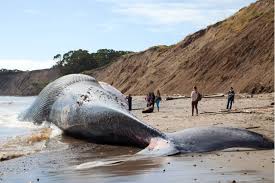
Blue Whale

Portugese-Man-of-War
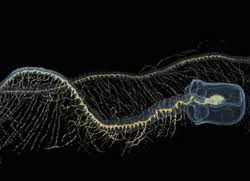
Giant Siphonophore.
God has jurisdiction over all aspects of creation. He rules over the creatures of the deep and sets in place winter and summer. If we ignore Him, complain about Him, or speak out against Him, He may allow us to wander in the desert we create for ourselves with all its hidden and venomous threats. If He didn’t consciously hold back the consequences of our sins, we would self-destruct.
Dying of a snake bite is merciless and prolonged agony. Our sin drags out death, and every day here in this earthly life is evidence that God is staving off our inevitable and well-deserved demise, giving us time to repent and be saved.
What immediately preceded the sending of the serpents?
Immediately prior to God’s sending of the fiery serpents, the people approached God to propose a deal, and He took them up on it. “If you give them into our hand…”
Although God kept His end of the bargain fair and square, the Israelites followed up with their end only momentarily. Shortly thereafter, they spoke against God and Moses.
The nature of that “war deal” was temporary in the Israelites’ minds but permanent in God’s. When God enters into a “deal,” it’s for good and for always. We humans aren’t like that.

Anything could have killed the Israelites when they went back on their word and rejected God’s provisions. Why snakes? What had God used as instruments of discipline up to this point? Leprosy, plagues, destruction by fire, war – why are the snakes the final mode of discipline Moses records?
Genesis 3: Did God send that serpent, too?
I’ve heard people challenge God’s goodness with questions like, “Why did God create a snake to tempt them? Why did He make a Tree of Knowledge of Good and Evil and put it in the Garden in the first place? He created man and set man up to fail.”

Is it possible that sin indwelled Adam and Eve before the serpent arrived? Could Eve’s conversation with the snake have been the catalyst for exposing rebellion and doubt already germinating in her mind and heart, causing it to bubble up and out?
When we visit counselors and psychologists to help us muddle through confusion or frustration, they often begin their sessions with questions. Their intention is to help us articulate what we already know to be true.

Although she and Adam “walked with God” in the Garden, Eve was by nature a fallible being, not a goddess. Her conversation with the serpent illuminated her constitution and ours. We are inclined to believe lies over Truth, to doubt God, and to reach for status and power that are not rightfully ours.
The snake didn’t sneak away from God’s watchful eye and wield his power over Eve in a covert operation. This encounter was not accidental, unexpected, or unsupervised. It was effectual, just as the discipline of the snake bites in the desert generations later was effectual. The sin in both Genesis 3 and Numbers 21 dwelt in the hearts of the people prior to the situations set into motion by their serpentine encounters.
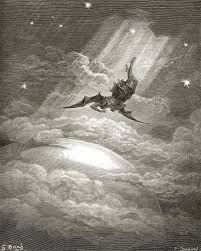
Before miniscule man arrived on the universal scene, there was God and Lucifer/serpent. God, of course, was and is predominant. He cast Lucifer out of Heaven and will in the future subdue him in a dungeon of darkness for eternity. In the middle time, which is our time, the serpent interacts with mankind. He asks us questions. We engage, revealing our inner thoughts and doubts, weaknesses, and failure to think and to perform perfectly.
When Satan questions us, as he questioned Eve, the result is moral failure. Otherwise, we would be on equal footing with God.
Connecting Numbers 21: 1-9 to Jonn 3:14-21
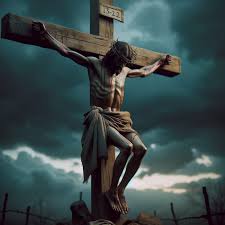
When God told Moses to lift up the snake, the people were to look at it. In John when the Son of Man is lifted up, the people are told not only to look, but also to believe.
Why, then, were the Israelites healed? They merely looked: they didn’t believe. Believing in a fiery bronze snake, the representation of death that had come as a result of sin, wouldn’t have made much sense. Yet, looking healed them. Does that contradict what we know from John 3, that it’s our faith and our belief that heal us?
Let’s think about the heart of those who looked at the snake. Consider that “He who loves me obeys my voice.” Those who looked at the snake, as they were instructed, obeyed God, and their faith in His authority prompted and fueled that obedience. “It is by faith you are saved.” They didn’t have faith in the serpent on the staff; they had faith in God, who gave them a command they chose to obey.
In John 3 when Jesus is lifted up, we are commanded not only to look at “Him whom they have pierced” but also to believe in Him. By that belief we gain not only physical, mental, psychological healing of earthly woes, but also eternal life that surpasses even the most fulfilling of earthly sojourns.

John 3:17 is a comparative statement and the crucial “other half” of John 3:14. The serpent was God’s swift, painful judgment of sin. Jesus was not sent as judgment, but a as salvation. The serpents were sent; Jesus was sent – both to different purposes.
I often hear this verse taken out of context. Any moral preference is deemed “judgmental,” and the idea that “Jesus didn’t come to judge” is thrown around sloppily as proof that everyone should mind his own business, live and let live.

The fact is, though, that the verdict is in and the sentence is set, and no, it wasn’t dished out by any of us, wagging our self-righteous fingers.
Going back to Genesis three again, did the sparring between Eve and the serpent, render a victor? Who won? Did Satan, via the serpent, convince Eve to sin, hurl mankind into judgment and take captive God’s favorite creation? Are we all squirming under Satan’s thumb now because He’s got the high score here in the fourth quarter?
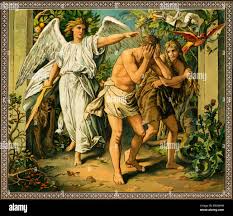
No, the snake in the garden, perhaps, was the instrument of punishment, the conduit of discipline. Eve didn’t believe God, which was revealed during her interaction with the serpent, and it was this lack of belief, not the wiles of the “most crafty creature in the Garden,” that elicited her punishment.
She hadn’t eaten the fruit of the Tree of Knowledge yet, but sin had already happened, before the snake started talking. She loved the darkness rather than the Light. Her sin and our sin are one and the same. As John 3 says, we have “hated the Light.” The talk with the serpent was the judgment. The unbelief, the evil deed of unbelief, already existed in her. Through the interception with the snake, she reaped the consequences of her sin, the consequences being knowledge/cognitive awareness and analytical understanding of good and evil, resulting shame.
The shame Adam and Eve felt was not connected to the awareness of good and evil but to the awareness of what she had rejected versus what she had embraced, the understanding that she had “loved the darkness rather than the Light, because her deeds were evil.”
Finally, John 3:21 explains the integration of faith and deeds: “But he who practices the truth comes to the Light, so that his deeds may be manifested as having been wrought in God.”
Look at the Lord and believe.