
Plato’s Myth of the Cave: Responding to Literature through Descriptive Writing

Artos Academy
Artos Academy

What kinds of material will I read and compose in this course?
Essays
Books
Narratives
Editorials
articles
Duration & Delivery
- Why are courses seven weeks long?
This course is designed with the independently educating family in mind. We honor your right and responsibility to exercise control over when, where, and how you interact with academic content, and we do our best to offer courses with flexible start dates and ongoing access to course content. The freedom to begin class whenever you choose throughout the year ensures customization of your schedule to accommodate the academic pacing you deem best.
Independent educators are often committed to a local church family and are heavily involved in sports, the arts, and community activities. Composition & Literature courses are designed to be completed in seven-week blocks, making it easy to take breaks and to bookend courses around your life. For homeschooling, after-schooling, or alternatively educating families, the versatility of these courses lets you prioritize trips, theater performances, playoff weeks, or carefully planned times of rest and restoration around academics as you see fit.
- When can I start?
Plato’s Myth of the Cave: Responding to Literature through Descriptive Writing is a seven-week long course with new start dates every Tuesday.
Each lesson features a video lecture, a private social space for discussions with the instructor and with other classmates, and learning activities and assignments.
- Does this course offer live meetings, or is it online only (asynchronous)?
Tuition includes seven weeks of access to optional weekly meetings with the instructor and classmates called Live Connections, as well as indefinite access to a private social group where asynchronous interaction with the instructor and classmates is ongoing.
- How long can I access the course materials?
Although each Composition & Literature course in the catalog is designed so that it can be completed in seven weeks ideally, enrollees have indefinite access to the course materials and can proceed through those materials at their own pace. Tuition includes access to seven weeks of live, personalized instruction via Live Connection meetings with the instructor and classmates, and access to the course materials and to the interactive, private social group is ongoing, even after access to seven weeks of Live Connection meetings has expired.
Live Connections
- Am I required to attend live, online meetings?
Students have the option to meet with the instructor multiple times throughout the course in Live Connection meetings. This is a time to talk with the instructor about course materials and to receive support, guidance, and individualized instruction along the way.
- What are the advantages of attending Live Connections?
Instructor-led discussions are centered on engaging topics that challenge students to think deeply and talk freely. Students learn online etiquette: sensing how and when to share ideas, anticipating and dealing with interruptions, overcoming technical issues, and understanding how to express genuine interest in the thoughts of others.
In addition to solid academic instruction, one of the central goals of the class is to foster social connections and encourage friendships. At least one team project is a part of every Artos Learning course. Collaboration is a buzzword in today’s workplace, as employers consider “soft skills” related to social interaction equally important to career specific skills. Team assignments build confidence and improve comfort levels in group situations, preparing students for the future and enriching their classroom experiences in the present.
Support for Independent Learners
Live meetings with the instructor are optional. Students who prefer to work independently can watch the video lectures and complete the assignments on their own. If a student attends one Live Connection meeting, he is not obligated to attend others. He may utilize these meetings as a time to get needed information or encouragement as he completes the coursework mostly on his own.
During live meetings students can ask questions about the learning materials and assignments and discuss the required reading for this course. Live Connections are recorded, so students who choose not to attend can watch the recordings at a time that is convenient to them.
- How do I join the learning community if I miss the Live Connection meetings?
As part of the first lesson in the course, learners gain access to the Live Connection, a Goal Tracker and access to the Idea Exchange, which is an exclusive, private group for registrants of the course and the instructor.
Students who choose NOT to attend the Live Connections receive feedback on assignments and have access to the instructor through the Idea Exchange, through email, and through the course components themselves. Personal feedback on assignments is an integral part of this course, whether a student attends the Live Connections or not.
Parent Consultations
For a minimal fee, an optional consultation is available twice during the course for parents who want to monitor more closely a student’s progress and to receive advice and tips for helping their child improve specific skills in writing, grammar, speaking, reading fluency, and comprehension.
Start Dates & Meeting Times
A new section of the course begins every Thursday. The duration of the Live Connection meetings is seven weeks, and access to the course materials is indefinite. Students who enroll together stay together for the duration of the course, interacting voluntarily in a social group and discussion forum exclusive to enrollees and interacting in real time through the Live Connections.
- What day of the week and time of day are the optional live meetings?
Meeting with the instructor and other learners in a Live Connection for support and guidance is optional. Scheduled interaction with peers provides opportunities for real-time feedback and collaborative learning. Optional Live Connection meetings for this course are available Thursdays at 11:00 A.M. Central Time.
- How do I reserve a seat in this course?
Your purchase gives you instant access to the course.
Required Reading
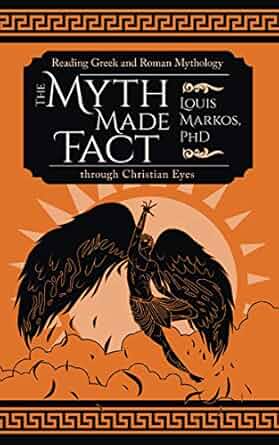
Students read the book, The Myth Made Fact through Christian Eyes, by Louis Markos, PhD, as well as selected materials from the Little, Brown Handbook 14th edition, by H. Fowler, Jane Aaron, et. al.

Overview of Objectives
No matter which Artos Academy course you choose, students should expect to spend at least three hours reading and writing outside of Live Connection meetings each week.
The objectives below are examples of skills practiced in each course. Similar standards are common to all states and are representative of the goals of every Composition & Literature course. All courses require students to read edifying, substantial literary works and research materials and to respond in written essays and discussion posts.
- Recognize and write in various modes, for different purposes, including to support and sustain an opinion or argument, to inform, and to express and reflect.
- Understand the relationship among writing task, purpose, and audience.
- Understand writing occurs through a process, and utilize a process that includes planning, revising, editing, and rewriting.
- Use technology to communicate effectively and to produce and publish writing.
- Understand writing can be used to answer questions and participate in short- and long term research and inquiry projects.
- Use evidence to support claims and convey ideas in writing.
- Integrate and synthesize others’ ideas into writing.
- Write often to develop fluency, confidence, and stamina.
Cornerstone Foundational Skills: 2022. Tennessee Board of Education. 10-20-17_III_J_Non Substantive_Changes_to_Math_ELA__Science_Standards_Attachment_2_-_ELA.pdf (tn.gov)
Prerequisites
Students taking this course are expected to have earned a Completion Certificate for Plato’s Myth of the Winged Soul: Responding to Literature through Journaling and Personal Narratives.
Course Content & Skills Focus
Students taking this course are expected to be able to read high school and college level texts, mainstream media sites, and academic journal articles.
The purpose of the course is to explore themes in ancient literature and to respond in thoughtful, personal ways through oral and written conversations with peers. Writing assignments focus on journaling and personal narratives.
Lessons include background information about Plato and the genre of myths. Other key concepts include:
- Religious and philosophical views of Ancient Greeks
- Biographical information about Plato, Socrates, and Aristotle
- Close reading of “The Myth of the Cave”
- Applications to popular culture
- Christian interpretation of Platonic ideals
- Close reading of Jack London’s “To Build a Fire”
- Comparison of myth and short story
- Multidimensional descriptive writing
- Instruction from The Intellectual Life by Sertillanges
This is considered a writing intensive course.
Grade Level Expectations
The content in the courses is appropriate for both middle school and high school students. Students who are new to APA Style may consider the APA Intensive Workshop as a supplemental activity. This course does not require research or sourced essays, as the content in the Descriptive Essay is based on personal observations; however, formatting of the title, page numbers, font size and type, etc. are in accordance with APA Style.
Courses in the Advanced Composition and Literature series are research oriented and require essays with scholarly sources and a Works Cited or Reference page for MLA or APA Styles, respectively. Explore those courses here.
Completion Certificate
Each lesson begins with a step-by-step content guide and a point value indicator. Students who successfully complete 80% of writing assignments and quizzes earn a Certificate of Completion to add to their transcripts, academic profiles, or curriculum vitae.

Technical Requirements
Students need a reliable Internet connection. Live class meetings are conducted in-person. The physical address of the meeting location will be sent through email. Students have the option of attending the meeting through Google Meet to allow added flexibility. Students who choose to attend class via Google Meet are expected to have a functional camera and microphone and to keep cameras and mics on for the duration of the class meeting unless otherwise instructed. Course materials are shared through the Artos Learning virtual classroom and typically include videos, pdf files, and website links.
Tuition
Students may withdraw from a course up to ten days before the start date with a 50% refund. No refunds are offered within ten days of a course start date.
Click below to purchase the course.
Course Series
-
Responding to Literature through Literary Analysis
$24.99 Add to cart -
Responding to Literature through Expository Writing
$24.99 Add to cart -
Responding to Literature through Descriptive Essays
$24.99 Add to cart -

Responding to Literature through Comparison & Contrast Essays
$24.99 Add to cart -
Responding to Literature through Journal Writing and Personal Narratives
$24.99 Add to cart
Questions?
Post your questions, comments, or responses below, or send a private email to [email protected]. I look forward to talking with you!
Responses