Artos Academy
Artos Academy

Writing about Current Events
Responding to Media in a Hyperconnected World
What kinds of material will I read and compose in this course?
editorials
Books
Narratives
reports
articles
Our first objective in this course is to identify the characteristics of reliable news sources. Along with limitless access to media comes the imperative for realistic plans for intake. This course introduces strategies and criteria to consider to maximize the time we spend reading and watching news and learning about important events happening in our immediate vicinity, our state, our nation, and our world.
Our second and equally important objective in this course is to crystalize our responses to current events by learning to write considerately, concisely, and clearly. This means understanding our audience and being mindful of their points of view, while making our own opinions and ideas palatable and interesting.
Ultimately, after assessing sources and honing our writing skills, we develop written arguments expressing our own perspectives. Research, documentation, and specific supporting evidence are all parts of bolstering our communication skills and making us a viable and solid voice in the public sphere.
Duration & Delivery
- Why are courses sixteen weeks long?
This course is designed with the independently educating family in mind. We honor your right and responsibility to exercise control over when, where, and how you interact with academic content, and we do our best to offer courses with flexible start dates and ongoing access to course content. The freedom to begin class whenever you choose throughout the year ensures customization of your schedule to accommodate the academic pacing you deem best.
Independent educators are often committed to a local church family and are heavily involved in sports, the arts, and community activities. Composition & Literature courses are designed to make it easy to take breaks and to bookend courses around family trips, theater performances, playoffs weeks, or carefully planned times of rest and restoration.
- When can I start?
Writing about Current Events is an sixteen-week long course with new start dates every Thursday.
Each lesson features a video lecture, a private social space for discussions with the instructor and with other classmates, and learning activities and assignments.
- Does this course offer live meetings, or is it online only (asynchronous)?
Tuition includes eighteen weeks of access to optional weekly meetings with the instructor and classmates called Live Connections, as well as indefinite access to a private social group where asynchronous interaction with the instructor and classmates is ongoing.
- How long can I access the course materials?
Although each Composition & Literature course in the catalog is designed so that it can be completed in sixteen weeks ideally, enrollees have indefinite access to the course materials and can proceed through those materials at their own pace. Tuition includes access to eighteen weeks of live, personalized instruction via Live Connection meetings with the instructor and classmates, and access to the course materials and to the interactive, private social group is ongoing, even after access to sixteen weeks of Live Connection meetings has expired.
Live Connections
- Am I required to attend live, online meetings?
Students have the option to meet with the instructor multiple times throughout the course in Live Connection meetings. This is a time to talk with the instructor about course materials and to receive support, guidance, and individualized instruction along the way.
- What are the advantages of attending Live Connections?
Instructor-led discussions are centered on engaging topics that challenge students to think deeply and talk freely. Students learn online etiquette: sensing how and when to share ideas, anticipating and dealing with interruptions, overcoming technical issues, and understanding how to express genuine interest in the thoughts of others.
In addition to solid academic instruction, one of the central goals of the class is to foster social connections and encourage friendships. At least one team project is a part of every Artos Learning course. Collaboration is a buzzword in today’s workplace, as employers consider “soft skills” related to social interaction equally important to career specific skills. Team assignments build confidence and improve comfort levels in group situations, preparing students for the future and enriching their classroom experiences in the present.
Support for Independent Learners
Live meetings with the instructor are optional. Students who prefer to work independently can watch the video lectures and complete the assignments on their own. If a student attends one Live Connection meeting, he is not obligated to attend others. He may utilize these meetings as a time to get needed information or encouragement as he completes the coursework mostly on his own.
During live meetings students can ask questions about the learning materials and assignments and discuss the required reading for this course. Live Connections are recorded, so students who choose not to attend can watch the recordings at a time that is convenient to them.
- How do I join the learning community if I miss the Live Connection meetings?
As part of the first lesson in the course, learners gain access to the Live Connection, a Goal Tracker and access to the Idea Exchange, which is an exclusive group for registrants of the course and the instructor.
Students who choose NOT to attend the Live Connections receive feedback on assignments and have access to the instructor through the Idea Exchange, through email, and through the course components themselves. Personal feedback on assignments is an integral part of this course, whether a student attends the Live Connections or not.
Start Dates & Meeting Times
A new section of the course begins every Thursday. The duration of the Live Connection meetings is sixteen weeks, and access to the course materials is indefinite. Students who enroll together stay together for the duration of the course, interacting voluntarily in a social group and discussion forum exclusive to enrollees and interacting in real time through the Live Connections.
- What day of the week and time of day are the optional live meetings?
Meeting with the instructor and other learners in a Live Connection for support and guidance is optional. Scheduled interaction with peers provides opportunities for real-time feedback and collaborative learning. Optional Live Connection meetings for this course are available Tuesdays at 1:30 P.M. Central Time.
- How do I reserve a seat in this course?
Your purchase gives you instant access to the course.
Required Reading
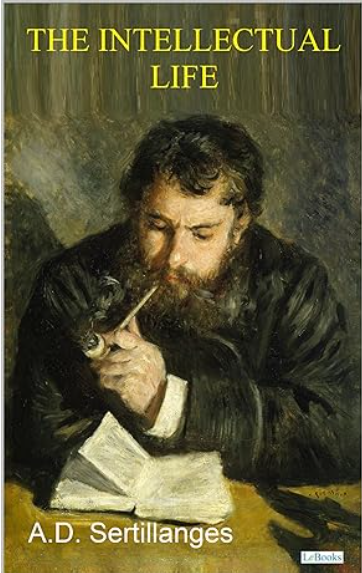
Students will read the book, The Intellectual Life by Sertillange, as well as articles from the following news sites, among others: The National Review, The Atlantic, The New York Times, The Washington Post, and The Wall Street Journal.
Course Content and Objectives
No matter which Artos Academy course you choose, students should expect to spend approximately two hours reading and writing outside of Live Connection meetings each week.
The objectives below are examples of skills practiced in each course. Similar standards are common to all states and are representative of the goals of every course, no matter the subject matter or theme. All courses require students to read edifying, substantial materials and to respond in written essays and discussion posts.
- Recognize and write in various modes, for different purposes, including to support and sustain an opinion or argument, to inform, and to express and reflect.
- Understand the relationship among writing task, purpose, and audience.
- Understand writing occurs through a process, and utilize a process that includes planning, revising, editing, and rewriting.
- Use technology to communicate effectively and to produce and publish writing.
- Understand writing can be used to answer questions and participate in short- and long term research and inquiry projects.
- Use evidence to support claims and convey ideas in writing.
- Integrate and synthesize others’ ideas into writing.
- Write often to develop fluency, confidence, and stamina.
Cornerstone Foundational Skills: 2022. Tennessee Board of Education. 10-20-17_III_J_Non Substantive_Changes_to_Math_ELA__Science_Standards_Attachment_2_-_ELA.pdf (tn.gov)
Skills Focus
Students taking this course are expected to be able to read high school and college level texts and mainstream media sites.
The purpose of the course is to teach students habits and strategies to help them read and interact with the media in thoughtful ways. Writing assignments focus on expository and informational writing (explaining a topic clearly) and persuasive and argumentative writing (stating a claim and supporting it with evidence).
Students learn to identify the traits of reputable sources and to navigate academic databases, a skill that can serve them throughout their academic careers and in their personal pursuits of deeper knowledge about any topic of interest to them.
A balanced view of media is presented and students are encouraged to take control of their thinking, viewing, and reading habits so that their interpretation of news and media content is healthy, positive, and edifying.
In addition to the expertise of the instructor, students experience the insight of three experts to whom media consumption is important: a military Lieutenant General, a career newspaper editor, and a State Representative.
Grade Level Expectations
The content in the courses is appropriate for both middle school and high school students. Students in the junior and senior level ability groups write sourced papers that utilize secondary texts and include a Reference page, while younger students write papers using primary sources only and are not required to include a Reference page.
Completion Certificate
Each lesson begins with a step-by-step content guide and a point value indicator. Students who successfully complete 80% of writing assignments and quizzes earn a Certificate of Completion to add to their transcripts, academic profiles, or curriculum vitae.
Technical Requirements
Students need a reliable Internet connection. Live class meetings are conducted in-person. The physical address of the meeting location will be sent through email. Students have the option of attending the meeting through Google Meet to allow added flexibility. Students who choose to attend class via Google Meet are expected to have a functional camera and microphone and to keep cameras and mics on for the duration of the class meeting unless otherwise instructed. Course materials are shared through the Artos Learning virtual classroom and typically include videos, pdf files, and website links.
Tuition
Students may withdraw from a course up to ten days before the start date with a 50% refund. No refunds are offered within ten days of a course start date.