


Plato’s Myth of the Winged Soul: Responding to Literature through Journaling and Personal Narrative
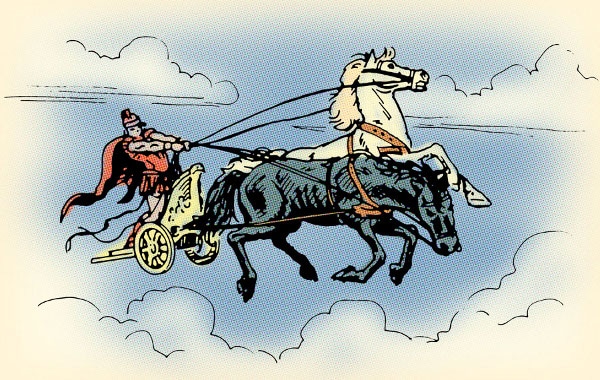
Noble Horse vs. Fiery Horse
-
Noble Horse vs. Fiery Horse
Plato refers to our carnal impulses as the fiery horse, while Lewis refers to them as our belly. Plato refers to our reason and logic as our noble horse, while Lewis refers to them as our head.
Discuss the questions below with your classmates. This discussion question is a good place to talk through your ideas before organizing your thoughts in a more formal way in the Personal Narrative Essay assignment, which is coming up in the final lesson of this course. Use this discussion forum as a place to clarify the way you think about moral decisions and responsibilities.
Discuss one, several, or all of these questions with your classmates. Be sure to post your own response first and then join in the conversation by responding to your classmates’ ideas.
Have you ever felt an angry voice build up deep in your belly while a calmer voice from your head tried to counter the angry one? Were you able to distinguish a third voice coming from your chest that must choose between the other two?
Is it sometimes hard to hear that voice, and is there any way to strengthen it? Does continually listening to and giving in to the voice from the belly cause the third voice to get weaker and lose itself?
https://www.artofmanliness.com/character/manly-lessons/what-is-a-man-the-allegory-of-the-chariot/
artofmanliness.com
What Is a Man? The Allegory of the Chariot
Learn about the allegory of the chariot and the lost idea of thumos.
Sorry, there were no replies found.
Log in to reply.